

Rotary Unions for Air & Pneumatic Systems: Selection Guide
A rotary union for air — also listed as a pneumatic rotary union, an air rotary joint, or simply an air swivel — is the sealed rotating interface that feeds compressed air from a stationary supply line into a spinning drum, chuck, shaft or roll. It is one of the least demanding media duties on paper, yet pneumatic systems still leak, seize and wear out unions early when the wrong design is specified.
This guide covers what pneumatic rotary unions actually do, the specifications that matter for compressed air service, how air fittings and threads are selected, and a four-parameter method to size an air rotary union for any machine. All numbers refer to the RTH series, our general-purpose platform rated for compressed air.
What Is a Rotary Union for Air?
The naming is a mess: rotary union for air, rotary joint for air, pneumatic rotary union, air rotary joint, rotary swivel, swivel union — industrial suppliers use all of these for the same class of device. (The full naming debate is in Rotary Joint vs Rotary Union vs Rotary Coupling.) Functionally, an air rotary union provides a leak-tight, low-torque passage for compressed air across a 360° rotating interface, using a mechanical seal that stays loaded while the shaft turns.
Compared with steam or thermal oil unions, air duty has three defining traits:
- Low temperature — compressed air rarely exceeds 80–100 °C at the joint, so seal materials are not thermally limited.
- Dry, unlubricated medium — air carries no lubricity, so seal faces must be self-lubricating (carbon graphite is the standard choice) and tolerant of dry running during start-up.
- Pressure pulsation — pneumatic circuits switch and vent constantly, so the seal must handle rapid pressure cycling without losing preload.
Where Pneumatic Rotary Unions Are Used
Typical compressed air applications for an air rotary joint or pneumatic rotary union include:
- Machine tools — air purge of spindles, pneumatic tool clamping, air-over-hydraulic clamps on rotating tables.
- Winders and winders’ air shafts — inflatable shafts on slitter-winders and printing presses hold cores with compressed air fed through a rotating union.
- Packaging and printing rolls — air-actuated brakes, clutches and lay-on rolls.
- Textile and drying drums — pneumatic cleaning nozzles and air agitation through rotating cylinders.
- General pneumatic equipment — robotics, pick-and-place heads and rotary indexing tables that need air across the rotation interface.
The RTH series lists hydraulic and pneumatic equipment among its core applications alongside machine-tool cooling and roll cooling — the same joint often serves air and coolant on one machine, which simplifies spares.
Key Specifications for Compressed Air Service
For air duty, the parameters that decide the design are pressure, speed and connection size — not temperature. The RTH platform covers:
| Parameter | RTH series (air service) |
|---|---|
| Medium | Compressed air, coolant, hot/cold water, oil, low-pressure steam |
| Max. working pressure | 1.6 MPa (232 psi) |
| Max. temperature | 120 °C |
| Speed range | 200 – 3,000 rpm |
| Connections | G / BSP / NPT threads; standard flanges on request |
| Seal design | Patented external multi-spring balanced seal |
| Internals | Stainless steel, anti-corrosion treatment |
| Typical price | $40–200 FOB per unit |
Two notes for pneumatic systems in particular:
- Air fittings and threads. Pneumatic plumbing is usually threaded — G (BSP) in metric markets, NPT in North America. An air rotary union must match the existing thread standard, or you will be re-piping the machine. The RTH series is available in G / BSP / NPT versions, and standard flanges can be supplied on request. When in doubt, send a photo of the connection and we will confirm the exact thread.
- Pressure margin. Specify the union for the compressor’s relief pressure, not the working pressure. A circuit running at 0.6 MPa may see 1.0 MPa spikes every time the receiver cycles — the 1.6 MPa rating of the RTH gives comfortable margin for most plant air (7–10 bar) systems.
If your duty involves saturated steam above 120 °C or thermal oil, the air platform is the wrong choice — step up to the RTQ series (2.0 MPa / 350 °C), covered in Steam vs Thermal Oil Rotary Joints.
Air vs Water vs Hydraulic: One Platform, Different Priorities
The same body family may serve several media, but the failure modes differ:
- Air service — wear from dry running and pressure cycling. Prioritize balanced seals with self-lubricating faces and easy replacement of friction pairs.
- Water / coolant service — scaling and corrosion. The RTH’s external multi-spring balanced seal is unaffected by scale, and stainless internals resist corrosion (types of rotary joints explains the seal families).
- Hydraulic service — 35–100 MPa circuits need heavy-duty housings and O-ring stacks, not air-style seals. See the RT-GY series and Hydraulic Rotary Joints in Steel Mills.
A practical benefit of standardizing on one platform: an RTH union specified for air today can often be reused for coolant duty on the same machine line, and spares cover both.
How to Select an Air Rotary Union — Four Parameters
Sizing a pneumatic rotary union takes four values plus one:
- Medium — compressed air (note if it is filtered/lubricated, or carries moisture).
- Working pressure — include surge and relief settings.
- Temperature — usually ambient-to-80 °C for plant air; confirm if the drum is heated.
- Rotary speed — continuous rpm of the rotating part.
- Connection size — thread type (G / BSP / NPT) and bore size (DN).
Send those five values to our sales engineers and you will get a firm model recommendation within one business day. Replacing an existing air rotary joint? A photo of the nameplate is enough — we confirm the exact equivalent within 24 hours. The complete selection guide walks through the same process for every medium.
Standard RTH units are priced $40–200 FOB, typically 60–80% below equivalent European and American brands, with tiered volume discounts from 20 units, 1-unit minimum order and 3–15 day lead times — budgeting context is in the rotary joint price guide.
FAQ
What is a rotary union for air?
A rotary union for air is a mechanical device that creates a sealed, rotating connection between a stationary compressed air supply line and a rotating machine part — a drum, chuck, shaft or roll. It is sold under many names (pneumatic rotary union, air rotary joint, rotary swivel, swivel union) but all describe the same class of product.
Can a rotary joint be used for compressed air?
Yes. The RTH series is rated for compressed air alongside coolant, water, oil and low-pressure steam, up to 1.6 MPa / 120 °C at 200–3,000 rpm. For most plant air systems (7–10 bar) this gives ample pressure margin. The main requirement is selecting the correct thread (G / BSP / NPT) and confirming continuous speed.
What is the difference between an air rotary union and an air swivel?
In practice, none — “swivel” terms (air swivel, rotary swivel, swivel union, rotating swivel joint, pipe swivel rotating joint) are regional or catalog naming variants for the same rotary union class. The one genuine sub-type is the elbow swivel joint (U-type or L-type), which changes the media direction by 90° while rotating. For a straight-through air feed, any air rotary union in the correct size will do.
What fittings do pneumatic rotary unions use?
Most air rotary unions use threaded connections — G (BSP) threads in metric markets and NPT threads in North America — matched to the machine’s existing air plumbing. Standard flanges are available on request for larger sizes or higher vibration. Always verify thread handedness against shaft rotation before installation.
What pressure and speed can an air rotary joint handle?
The RTH series handles 1.6 MPa (232 psi) and 200–3,000 rpm in continuous duty. Specify for the compressor’s relief pressure rather than the working pressure to absorb surges. For higher pressures, the hydraulic family (RT-GY / RT-JG / JL-DD-DC) covers 35–100 MPa.
How much does a pneumatic rotary union cost?
Standard air-service units (RTH series) run $40–200 FOB, typically 60–80% below equivalent European and American brands, with tiered discounts from 20 units. Custom sizes, special threads and multi-passage air/hydraulic combinations are quoted individually — see the price guide for the cost drivers.
Next Step
Browse the RTH series specifications or send your five parameters (medium, pressure, temperature, speed, connection size) to Frank Cao — frankcao@ruitus.com / WhatsApp +86 177 9883 6850 — for a model recommendation within one business day. New to rotary unions? Start with What Is a Rotary Joint? or the selection guide.
Contact us — or browse the full product range.
Related Articles
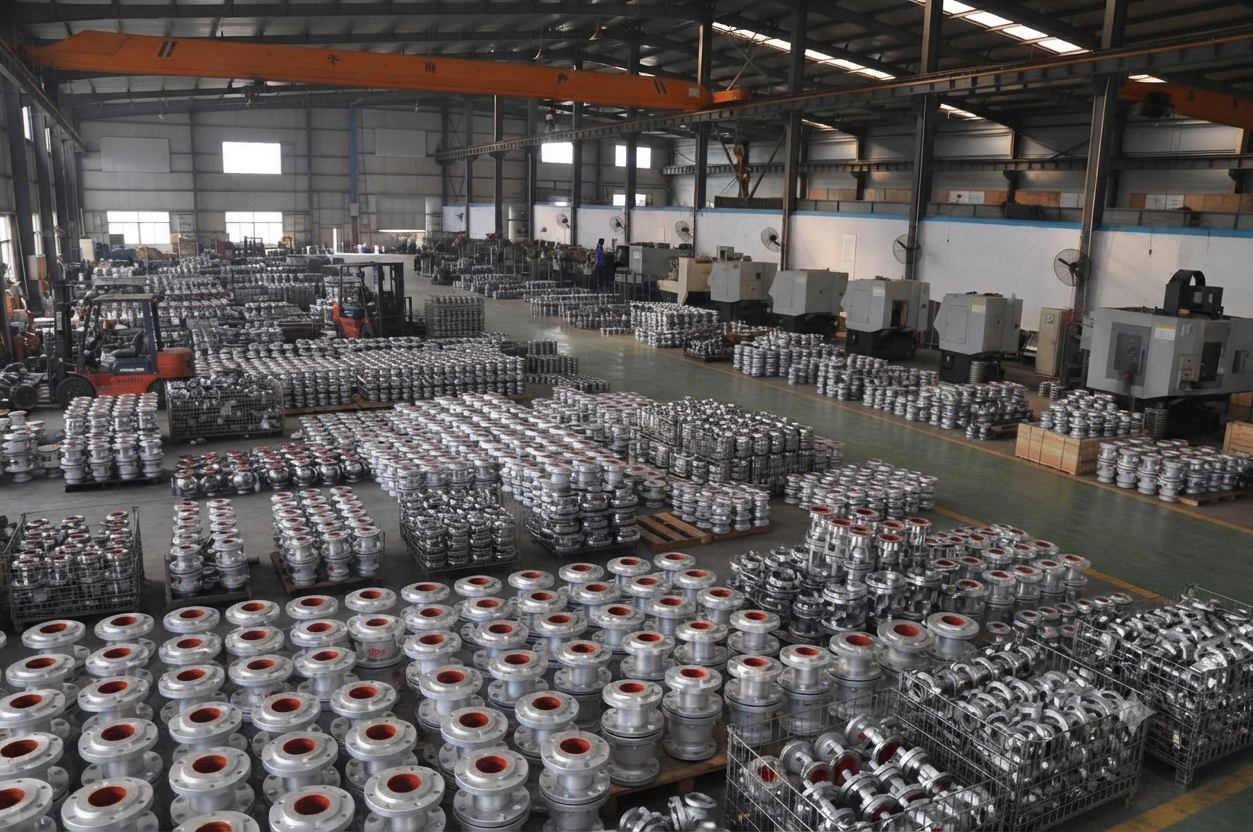
Rotary Joint Price Guide: What Drives Cost and How to Budget
Nov 16, 2026
Types of Rotary Joints: A Complete Guide to Designs and Configurations
Nov 16, 2026
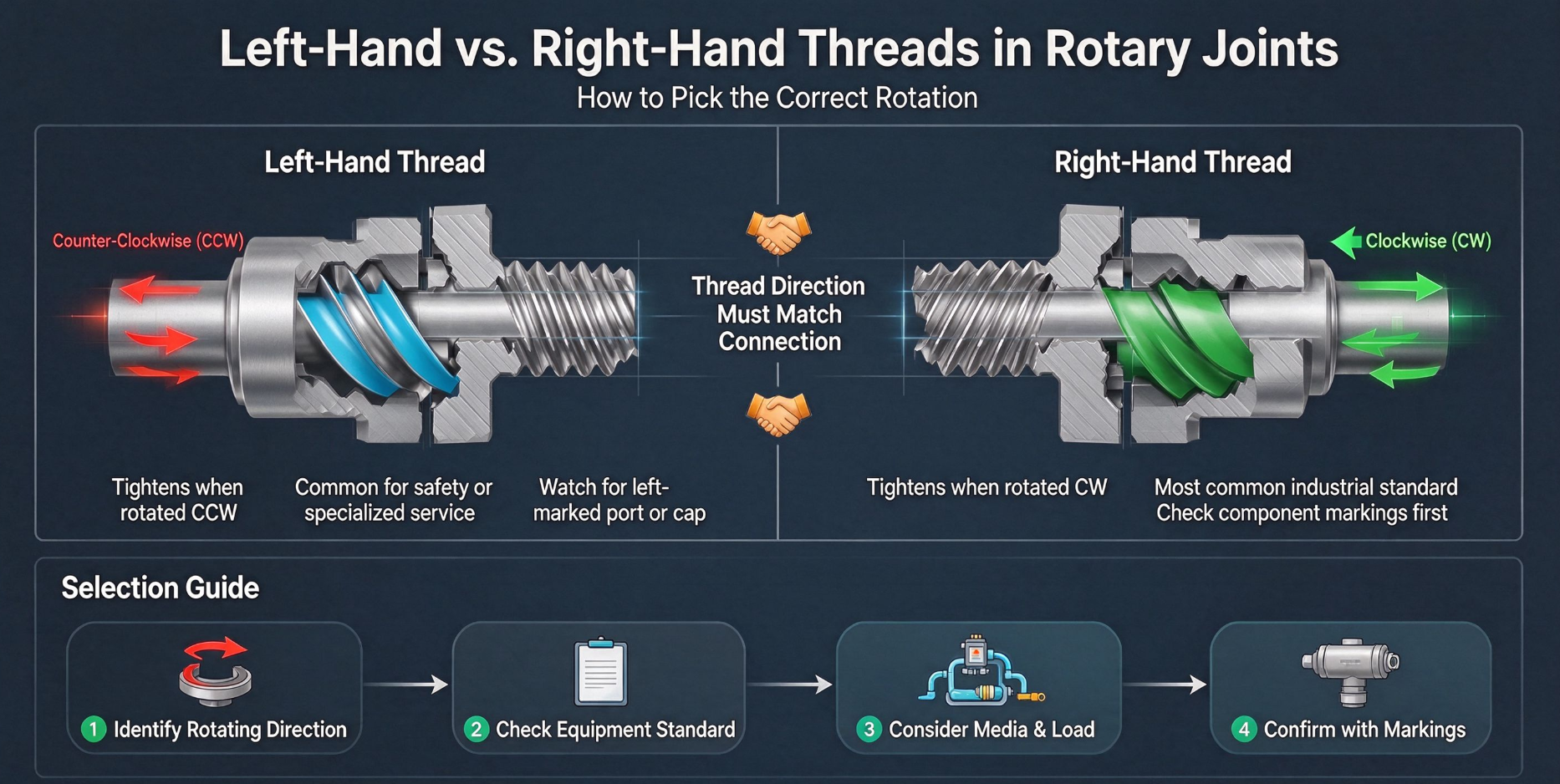
Left-Hand vs. Right-Hand Threads in Rotary Joints: How to Pick the Correct Rotation
Nov 9, 2026
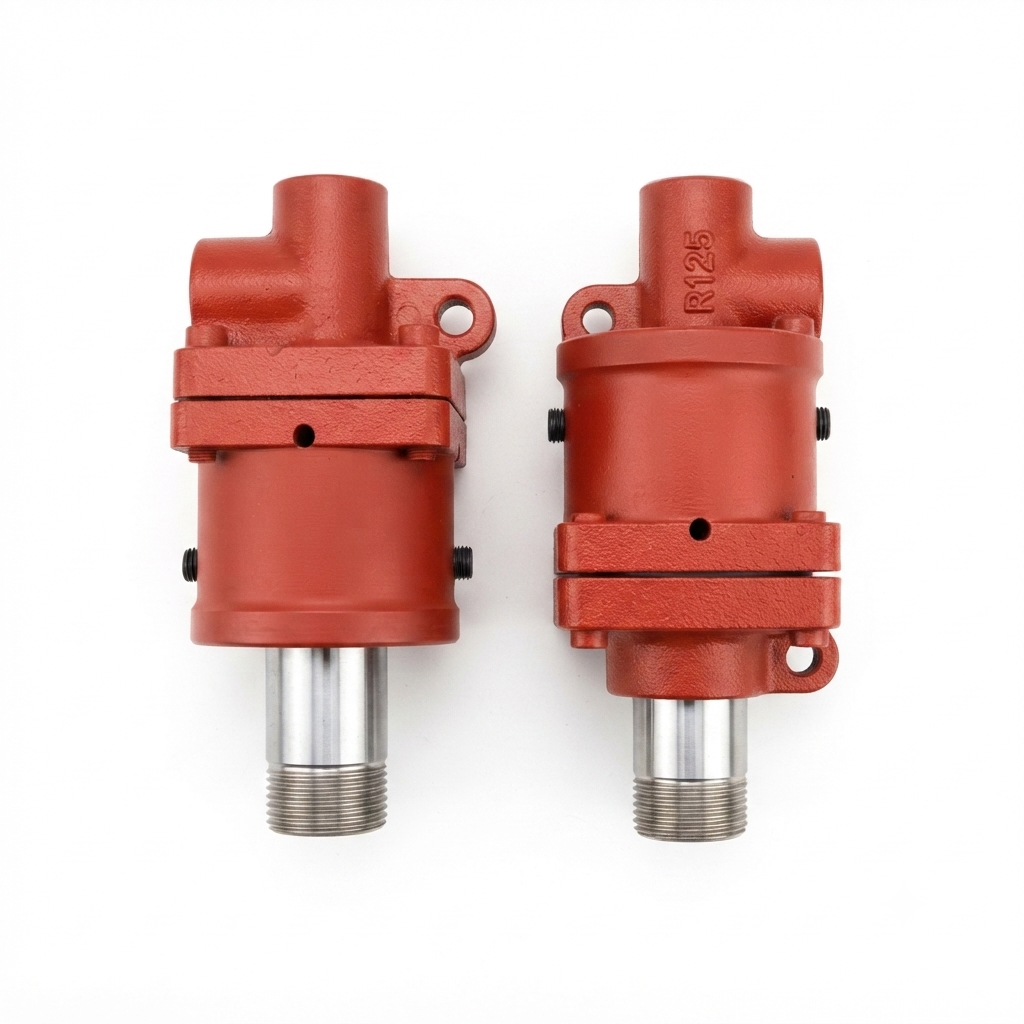
Related Articles
How to Choose the Right Rotary Joint: A Complete Selection Guide
Choosing the wrong rotary joint leads to leaks, downtime, and costly replacements. This guide walks you through the 6 critical factors — media, pressure, temperature, speed, material, and connection — to match the perfect rotary union or coupling to your application.
8 min read Types of Rotary Joints: A Complete Guide to Designs and Configurations
All types of rotary joints explained — classified by flow path, connection, seal design and duty class. Covers high pressure rotary joints, high speed rotary unions, through bore, multi passage, miniature and stainless steel types, with a type-to-series mapping table.
9 min read Rotary Joint vs Rotary Union vs Rotary Coupling: What's the Difference?
Rotary joint, rotary union and rotary coupling are three names for the same device. This guide explains where each term is used, which names suppliers use, and what to specify when ordering — plus the one 'coupling' that is a completely different product.
6 min readSend Us Your Drawing or Duty Conditions
Tell us the medium, temperature, pressure, speed and connection size. Our engineers reply with a selection or a custom proposal — usually within one working day.