

What Is a Rotary Joint? Working Principle, Types & Selection
What Is a Rotary Joint?
A rotary joint is a precision mechanical device that transfers fluid — steam, water, thermal oil, coolant, air, hydraulic oil or any other medium — from a stationary supply line into a rotating machine part, and usually back out again through a return line. Dryers, calender rolls, machine spindles, steel casters and wind turbine platforms all need this interface: the pipe stays still, the equipment turns, and the joint keeps the connection sealed through millions of rotations.
You will meet the same device under several names. Rotary union is common in North America, swivel joint in hydraulic contexts, and rotor joint is a frequent variant spelling in search engines and older catalogs. Whatever the label, the function is identical: a leak-free rotating media connection. (We compare the terminology in detail in Rotary Joint vs Rotary Union vs Rotary Coupling.)
How Does a Rotary Joint Work?
Inside every rotary joint there are two parts that move relative to each other: a rotor that spins with the machine and a housing (or cover) connected to the stationary piping. The medium flows through the rotor into the machine’s rotating chamber and returns through a second passage.
The critical engineering problem is the interface between rotor and housing — this is where leakage would occur. The answer is a balanced mechanical seal: a friction pair (typically carbon against silicon carbide or hardened steel) pressed together by springs, designed so that pressure and speed variations do not break the sealing film. In balanced designs the closing force stays stable as pressure rises, which is why a well-built joint can run for months on continuous duty while an unbalanced or worn design drips from day one. Bearings support the rotor so the seal faces stay aligned; high-quality joints use oil-free bearing support in duty cycles where lubrication is impractical.
Main Types of Rotary Joints
Each rotary type suits a different duty. The useful way to classify them:
- By medium — steam / thermal oil joints (high temperature, e.g. up to 350 °C), water / coolant joints, air and gas joints, and hydraulic oil joints (which may run at extreme pressure, 35 MPa and beyond).
- By speed — high-speed joints for machine spindles (up to 10,000 rpm in MQL service) versus low-speed joints for dryers and continuous casters (100–200 rpm, high torque, constant load).
- By passages — single-passage joints for simple in/out flow, and multi-passage / multi-flow designs (20+ passages on ladle turret slip rings) where several media cross one rotating interface.
- By mounting — threaded (G / BSP / NPT), flanged, or embedded-type joints installed inside the machine, as on continuous casting segment cooling circuits.
Standard series follow this map: RTH for water and low-pressure steam, RTQ for saturated steam and thermal oil, CNC through-spindle for machining centers, and dedicated lines for hydraulic, stainless steel and metallurgical duty.
How to Select the Right Rotary Joint
Selection comes down to four parameters — medium, pressure, temperature and speed — plus the connection or mounting dimensions. Two practical rules make the process painless:
- Match the duty, not the brand name. A joint rated 1.6 MPa / 120 °C will fail early on 350 °C thermal oil; an unbalanced seal will weep on a 24/7 line. State the medium and duty cycle honestly and the correct series becomes obvious.
- Send the nameplate. If you are replacing an existing joint — whatever the original brand — a photo of the nameplate plus the mounting and connection dimensions is enough for us to confirm the exact equivalent, usually within 24 hours.
Standard units ship in 3–15 days after order confirmation (MOQ 1 unit), priced well below European and American brands for the same duty. For the full parameter-by-parameter walkthrough, see our rotary joint selection guide, or contact Ruitus with your duty conditions for a firm recommendation.
Key Takeaways
- A rotary joint (rotary union / rotor joint) transfers fluid between stationary piping and rotating equipment — nothing more, nothing less.
- Sealing technology is the heart of the device: balanced mechanical seals and proper bearing support decide whether a joint runs for months or leaks from day one.
- Classify your need by medium, speed, passages and mounting, then match the four duty parameters to a rated series — or send the nameplate and let the manufacturer confirm the match.
Related Articles
Can You Replace a BSP/G Thread Rotary Joint with a Deublin-Compatible NPT Thread Union Without Changing Machine Piping?
Oct 22, 2026
How to Find a Cost-Effective Alternative to Deublin Rotary Unions for Paper and Corrugated Box Machinery
Oct 22, 2026
XCMG Authorized Rotary Joint for Water in Vietnam: High-Performance Sealing Solutions for Local Industries
Oct 9, 2026
Related Products
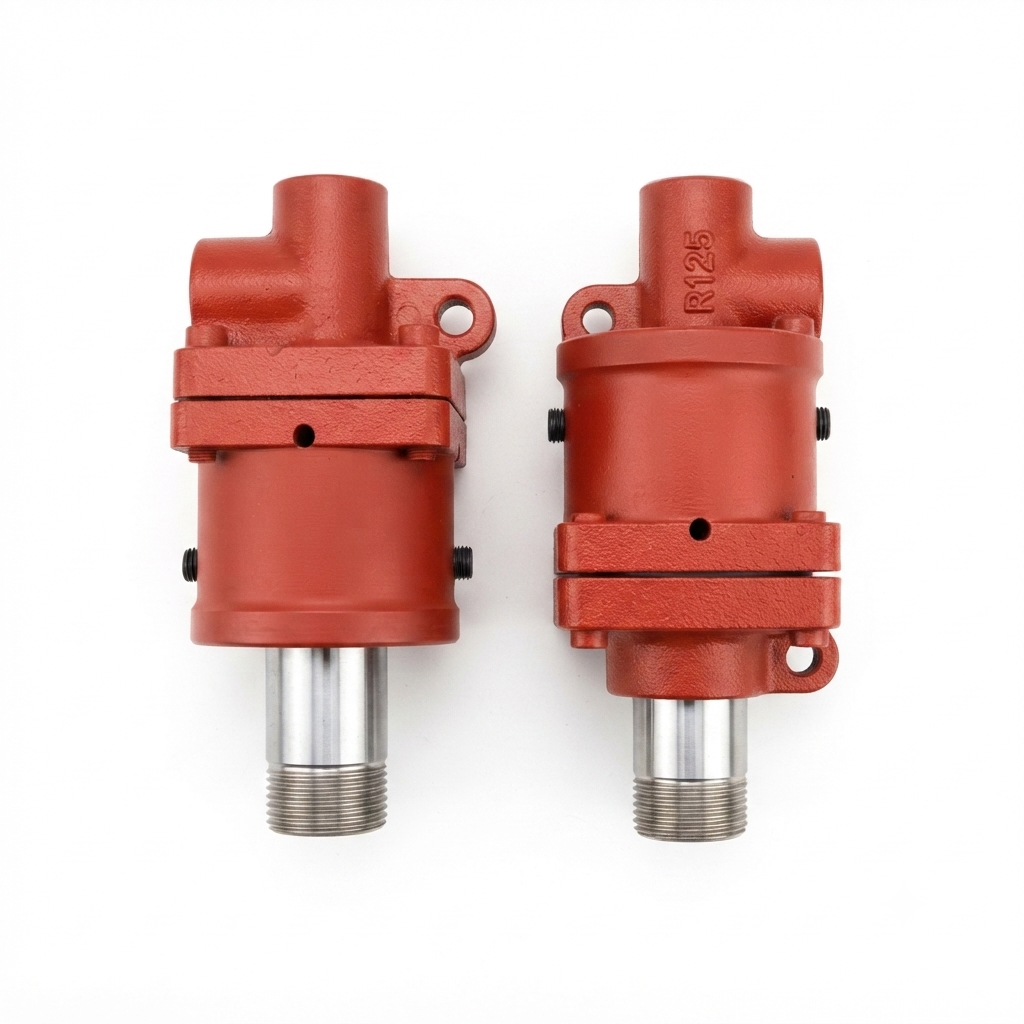
RTH Series — Rotary Joint for Water/Coolant
Patented balanced-seal design for smooth media flow
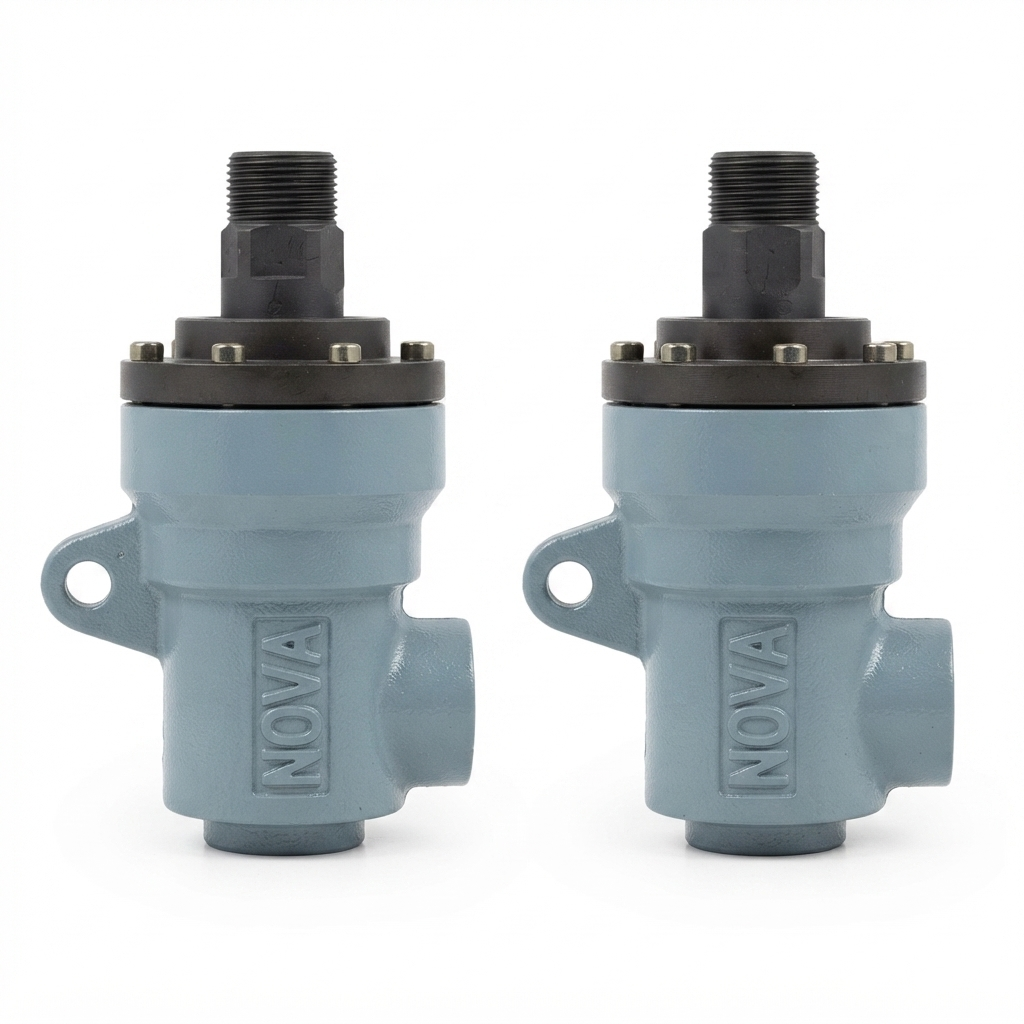
RTQ Series — Rotary Joint for Steam & Thermal Oil
Low-speed rotary joint for steam & thermal oil — dual-spherical graphite seal, 2.0 MPa / 350°C, 50–200 rpm. ISO 9001 quality, 60–80% below Western brands.
Send Us Your Drawing or Duty Conditions
Tell us the medium, temperature, pressure, speed and connection size. Our engineers reply with a selection or a custom proposal — usually within one working day.