

Rotary Union for Steam: Real Operating Specs, GA Drawings, and Shop-Floor Notes
By Frank Cao | Xuzhou Ruitus
If you run a corrugator line, a textile drying cylinder, or a chemical reactor, you already know one truth about a rotary union for steam: when it fails, the whole line stops—and nobody wants to crawl next to a 180°C steam header during an unscheduled shutdown.
Over the past few years visiting packaging plants and paper mills, I have seen plenty of steam joints fail in under three months. Almost every time, the root cause wasn’t bad steel—it was either the wrong seal grade for dry/wet steam transitions, poor siphon alignment, or mismatched mounting dimensions when swapping out OEM units like Kadant, Johnson, or Deublin.
Instead of giving you textbook theory, I am sharing the actual specs, general arrangement (GA) mounting drawings, and shop-floor photos of the steam rotary joints we build and ship every week at Xuzhou Ruitus.
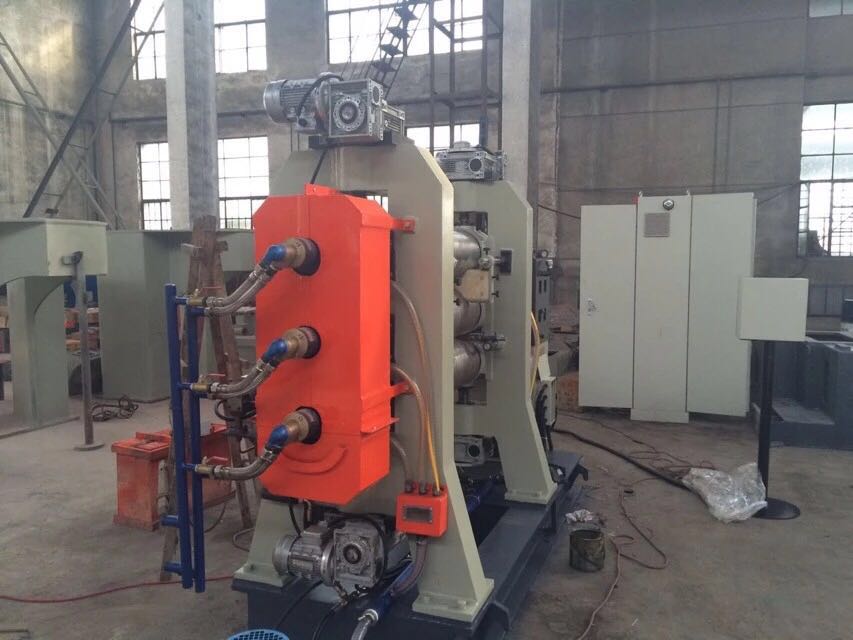
1. What Actually Matters Inside a Steam Rotary Union
Steam is unforgiving because it carries high heat without providing any oil lubrication. Unlike hydraulic or thermal oil joints, a rotary union for steam relies entirely on self-lubricating seal faces and heat-resistant secondary seals.
When we machine and assemble steam units in our workshop, here is the baseline configuration we use to prevent premature leaking:
- Primary Mechanical Seal (Carbon Graphite vs. Tungsten Carbide / SiC): We use high-density antimony- or resin-impregnated carbon graphite running against precision-lapped Tungsten Carbide or Silicon Carbide. Carbon provides dry-running lubricity during startup before condensate forms, while the hard counter-face resists thermal shock and steam erosion.
- Bearings & Internal Support: High heat expands metal fast. Standard off-the-shelf bearings seize up when grease cooks out at 200°C. We use high-temperature carbon-graphite sleeve bearings (for self-supported steam joints) or high-temp rated deep-groove ball bearings with proper thermal clearance.
- Housing & Rotor Metallurgy: Depending on line pressure and corrosion requirements, housings are machined from AISI 1045 carbon steel, ductile iron, or AISI 304 / 316 stainless steel for washdown and chemical environments.
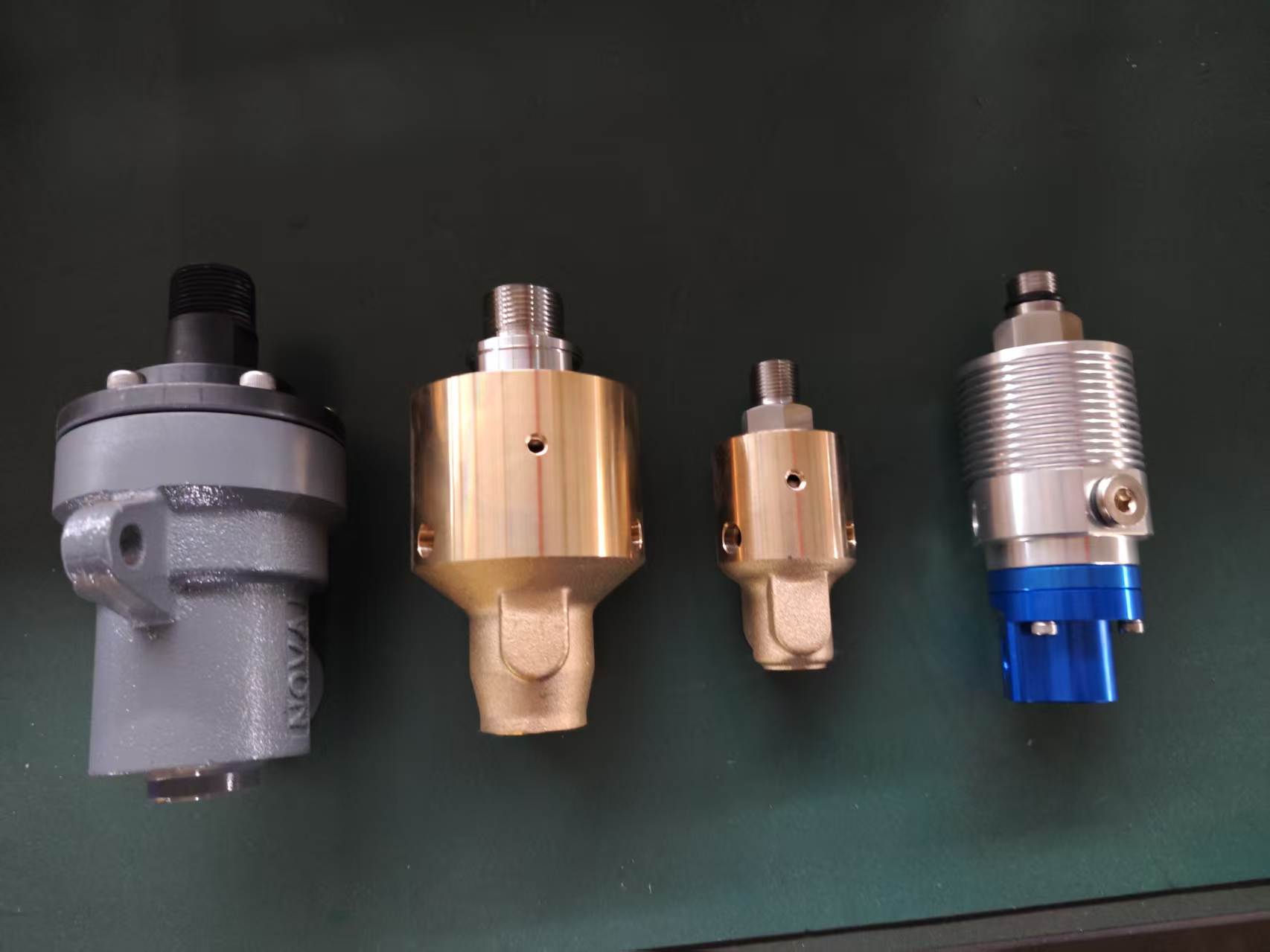
Shop-floor inspection: Unbranded 3/4” BSP rotary joints machined from solid bar stock, pressure-tested and ready for direct OEM replacement.
2. Standard Technical Specifications (Reference Sheet)
Before ordering any replacement steam joint, cross-check your line conditions against these operating limits. While we customize flange and thread connections to match existing equipment, here are the typical working parameters for our standard single-flow and dual-flow steam series:
| Parameter | Standard Steam Series (e.g., SJ / Heavy-Duty Type) | High-Temp / High-Pressure Option | | Media | Saturated Steam, Superheated Steam, Hot Water | High-Pressure Steam & Condensate Return | | Max Operating Temperature | Up to 220°C (428°F) | Up to 280°C (536°F) | | Max Working Pressure | 1.8 MPa (18 bar / 260 PSI) | 3.0 MPa (30 bar / 435 PSI) | | Max Rotational Speed | Up to 1,000 RPM (size-dependent) | Up to 1,500 RPM (balanced seal design) | | Connection Sizes | 3/8” to 4” (BSP, NPT, BSPT, or DIN/ANSI Flange) | Custom Quick-Release or Split Flange | | Housing Material | Carbon Steel (AISI 1045) / Ductile Iron / SS304 | SS304 / SS316L | | Seal Face Combination | Carbon Graphite vs. Tungsten Carbide / SiC | Balanced Carbon vs. Reaction-Bonded SiC |
3. GA Mounting Drawings: Checking Fit Before You Buy
One of the biggest headaches for plant maintenance managers is buying an aftermarket rotary joint only to discover the port center distance is off by 5 mm, forcing your pipefitters to cut and re-weld rigid steam piping.
Whenever a customer asks us to match an existing unit—such as our SJ10-12 (3/4” BSP) or drop-in replacements for Johnson/Kadant steam joints—the very first thing we verify is the General Arrangement (GA) mounting drawing. You need to confirm four critical external dimensions before placing a PO:
- Overall Length (A): Ensures clearance inside machine guards and safety covers.
- Rotor Thread / Flange Spec (B): Right-hand (RH) vs. Left-hand (LH) thread—always check drum rotation direction so the joint self-tightens rather than unscrewing itself.
- Housing Port Size & Center Distance (C): Matches your existing flexible metal hoses without pipe strain.
- Siphon Pipe Thread / Bore (D): Essential for dual-flow joints removing condensate from drying cylinders.
Reference GA mounting drawing showing external envelope dimensions, wrench flats, and G3/4” port connections for 100% drop-in installation.
4. Three Installation Mistakes That Kill Steam Joints Early
Even the best-machined rotary union for steam will leak prematurely if installed poorly. When I supervise on-site installations for key accounts, these are the three things I always check first:
- Rigid Piping Side-Load: Never connect hard steel pipe directly to a self-supported rotary union. Thermal expansion in steam headers puts massive radial side-load on the carbon bearings, cracking them within days. Always use flexible braided stainless steel hoses with proper slack loops.
- Running Dry Without Condensate Control: If a steam trap fails closed, the drum fills with water (waterlogging); if the rotary joint runs completely dry at high RPM without proper carbon grade selection, the seal faces overheat and score.
- Skipping Full Material & Pressure Verification: Always ask your supplier for a Material Test Certificate (MTC) for pressure-retaining metal parts and hydro/air test records before putting a new batch into your spare parts crib.
Every steam rotary union undergoes pressure testing and comes with full EN 10204 3.1 MTC traceability before leaving our facility.
Need a Drop-In Replacement or Custom GA Drawing?
If you are trying to reduce your spare parts budget without sacrificing seal life—or if you need an unbranded OEM-equivalent rotary union for steam—send us your existing OEM part number, operating pressure, steam temperature, RPM, and connection size.
My engineering team will cross-reference the specs, send over the GA mounting drawing for your team to verify fit, and quote you directly from our factory floor.
Related Articles
How to Select the Right Rotary Joint: A Practical Guide to Pressure, RPM, Media, and Temperature
Nov 20, 2026

How Do We Choose Sealing Materials for Rotary Unions? Why "It Depends" Is the Most Honest Answer
Nov 18, 2026

Deublin Rotary Union Alternatives: How to Cutting Costs Without Compromising Plant Uptime
Nov 17, 2026
Send Us Your Drawing or Duty Conditions
Tell us the medium, temperature, pressure, speed and connection size. Our engineers reply with a selection or a custom proposal — usually within one working day.