

How to Select the Right Rotary Joint: A Practical Guide to Pressure, RPM, Media, and Temperature
By Frank Cao | Xuzhou Ruitus
Choosing a rotary joint (or rotary union) looks straightforward on paper—match the pipe thread, bolt it onto the roll, and start the line. Yet in my day-to-day work with corrugated packaging plants, steel mills, and industrial equipment manufacturers, mismatched operating parameters remain the #1 cause of premature seal failure and unplanned downtime.
Even if an aftermarket union matches the external mounting dimensions of an OEM unit like Kadant, Johnson, or Deublin, the internal engineering must match what is happening inside your system.
Whenever my engineering team sizes or recommends a rotary joint, we evaluate four core parameters together—never in isolation. Here is how each factor shapes the final configuration.
1. Media: The Starting Point of Material Selection
The fluid passing through the union dictates the metallurgy of the housing, shaft, and primary seal faces:
- Saturated Steam & Hot Water: Requires self-lubricating Carbon Graphite paired against Tungsten Carbide or Silicon Carbide, along with steam-resistant elastomers like EPDM or PTFE.
- Thermal Oil (Hot Oil): Oil provides boundary lubrication, allowing carbon-to-metal or carbon-to-carbide faces to run smoothly at elevated temperatures, paired with high-grade FKM (Viton) static seals.
- Cooling Water (Clean vs. Dirty): In clean closed-loop systems, standard carbon-against-ceramic or carbide works reliably. However, in heavy-duty environments like continuous casting or rolling mill ultra-fast cooling (UFC) lines, water often carries scale and abrasive particles. Here, a Silicon Carbide vs. Silicon Carbide (SiC/SiC) “hard-on-hard” seal pair is essential to prevent rapid grooving and wear.
- Compressed Air / Hydraulic Oil: High-pressure hydraulic applications require precision-lapped balanced seals and heavy-duty bearings to prevent leakage under extreme pressure spikes.
2. Operating Temperature: Protecting Seals and Bearings
Temperature limits are rarely about the steel or brass housing—they are about the elastomers and bearing grease inside:
- Below 120°C: Standard high-grade elastomers (NBR or standard FKM) perform well for general water and air duties.
- 120°C – 220°C: Common in steam corrugators and thermal oil heating rolls. We switch to specialized high-temperature FKM, EPDM, or spring-energized PTFE seals, paired with high-temperature synthetic bearing grease.
- Above 220°C: Elastomeric O-rings begin to harden and lose elasticity. At this level, metal bellows designs, graphite packings, or externally supported steam joints become necessary to maintain consistent sealing force without thermal degradation.
3. Working Pressure: Balanced vs. Unbalanced Seal Design
Fluid pressure pushes the rotating and stationary seal faces together. While some closing force is needed to prevent leaks, too much force creates excessive friction and heat:
- Low to Moderate Pressure (Up to 10–15 bar): Standard unbalanced seals are simple, rugged, and cost-effective.
- High Pressure (15 bar to 50+ bar): High pressure requires a pressure-balanced mechanical seal design. By hydraulically offsetting part of the fluid load, a balanced seal keeps face contact pressure within safe limits, preventing overheating and premature wear.
4. Rotational Speed (RPM): Managing Friction and the PV Factor
Speed directly impacts heat generation at the seal interface and load on the internal bearings:
- Low RPM / Heavy Load: Slow-rotating steel mill rolls or batch mixers prioritize structural rigidity and resistance to shaft runout/vibration over high-speed balancing.
- High RPM: High-speed paper cylinders, printing presses, and machine tool spindles require precision-balanced rotors, low-friction seal combinations, and high-speed ball bearings to minimize heat buildup.
Engineering Rule of Thumb (The PV Factor): Always evaluate Pressure × Velocity (RPM) together. A union can easily handle 30 bar at 50 RPM, or 5 bar at 3,000 RPM—but running 30 bar at 3,000 RPM simultaneously requires a specialized balanced-seal, high-speed assembly.
Summary Checklist Before You Request a Quote
To ensure you get a 100% drop-in rotary joint that lasts longer and reduces your maintenance OPEX, always have these five details ready:
- Media type (and whether the fluid is clean or contains particles)
- Maximum operating temperature (°C or °F)
- Maximum working pressure (bar or PSI)
- Operating speed (RPM)
- Connection size & type (BSP, NPT, Flange, or existing OEM model number)
Not sure which configuration fits your line best? Send your working parameters or existing part number to our engineering team at Xuzhou Ruitus, and we will specify the exact seal and housing setup for your application.
Related Articles
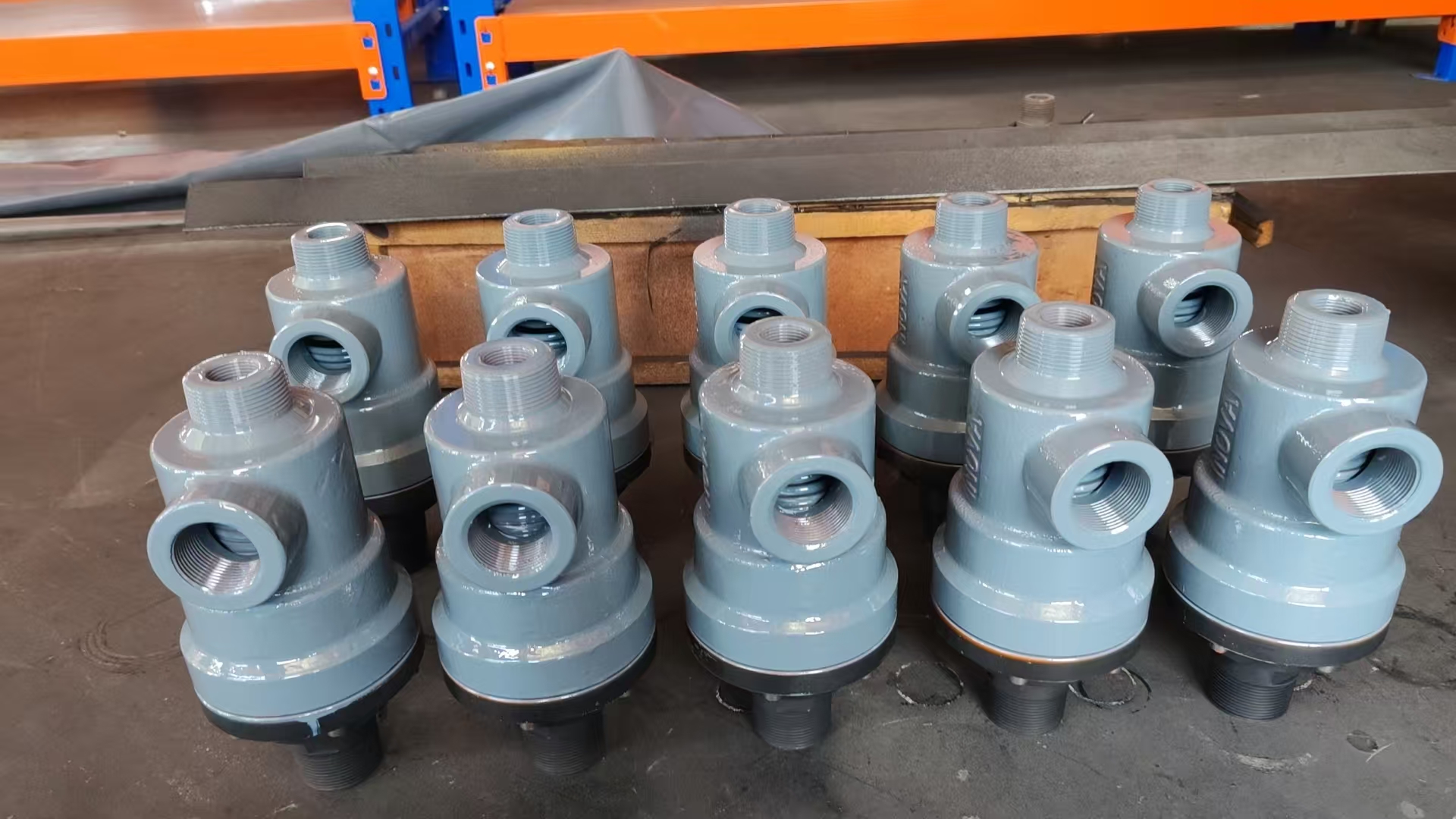
Rotary Union for Steam: Real Operating Specs, GA Drawings, and Shop-Floor Notes
Nov 20, 2026
How Do We Choose Sealing Materials for Rotary Unions? Why "It Depends" Is the Most Honest Answer
Nov 18, 2026

Deublin Rotary Union Alternatives: How to Cutting Costs Without Compromising Plant Uptime
Nov 17, 2026
Send Us Your Drawing or Duty Conditions
Tell us the medium, temperature, pressure, speed and connection size. Our engineers reply with a selection or a custom proposal — usually within one working day.